
Beyond Rent Collection: The Modern Property Management Challenge
Managing properties today involves much more than collecting rent. Property managers handle tenants, leases, maintenance, vendors, accounts, and reporting. When these processes run on spreadsheets, emails, and disconnected tools, small gaps quickly turn into operational problems.
This is where the right ERP integration makes a measurable difference. Not by adding another system, but by connecting everything into one structured workflow.
Key Takeaway
ERP integration transforms property management from reactive firefighting to proactive portfolio optimization by creating a single source of truth for all operations.
Struggling with Disconnected Property Management Systems?
Discover how Hornettec’s tailored ERP solutions for the GCC market can unify your rent tracking, maintenance workflows, and tenant communications into one efficient platform.
Who This Guide Is For in Bahrain and the GCC
This guide applies to teams that manage properties daily and struggle with operational visibility. It is relevant for:
Property Management Companies
During peak hours leading to client dissatisfaction and operational chaos.
Real Estate Owners & Developers
Managing rental portfolios and seeking better operational control and visibility.
Facility & Maintenance Teams
Coordinating service requests, vendors, and preventive maintenance schedules.
Finance & Accounting Teams
Responsible for rent posting, receipts, reconciliations, and financial reporting.
Why Property Operations Break When Systems Are Disconnected
Most property teams do not struggle because of lack of effort. They struggle because information is spread across too many places.
- Rent Collection
- Maintenance
- Tenant Records
- Reporting
Rent Status Unclear
Invoices, reminders, and payments tracked separately across spreadsheets, emails, and accounting software leads to confusion about what's been paid and what's overdue.
Impact: Delayed cash flow, missed late fees, and strained tenant relationships.
Maintenance Chaos
Requests come through calls, WhatsApp, or emails with no proper tracking or closure visibility. Emergency repairs become the norm instead of preventive maintenance.
Impact: Higher repair costs, tenant dissatisfaction, and vendor management headaches.
Scattered Tenant Records
Tenant information sits across emails, folders, and paper files. Lease documents, communication history, and payment records are never in one place when you need them.
Impact: Slow response times, compliance risks, and missed renewal opportunities.
Manual Reporting Delays
Reports take days to prepare as data must be collected from multiple sources and manually compiled, delaying critical decisions for owners and managers.
Impact: Reactive decision-making, missed portfolio insights, and owner dissatisfaction.
These are system problems, not people problems. The right ERP integration addresses these issues at their core by creating connected workflows.
Tired of Operational Headaches?
Discover how Hornet ERP for Salons can automate your appointment booking, staff scheduling, and inventory management in one integrated platform.
Benefits of Real Estate ERP Integration for Property Teams
An ERP system unifies finance, operations, and tenant relations into a single “source of truth,” acting as the strategic brain of the business. Key changes include:
Centralized Database
A single, verifiable source of truth where operational changes (e.g., lease renewal) automatically update financial modules.
Real-time Dashboards
Live data on rental income, pending maintenance costs, and vacancy rates across your entire portfolio.
Team Collaboration
Shared tenant data across departments eliminates confusion between maintenance and accounting teams.
Workflow Integration
Actions like "Move-Out" automatically trigger related processes in finance and maintenance inspection.
For property teams looking to centralize rent, maintenance, and tenant workflows, a real estate property management software built with ERP integration forms the operational backbone.
Rent Management Becomes Predictable When Billing and Accounts Connect
Rent tracking is usually the first area where ERP delivers visible results.
Automated Rent Reminders and Tracking
With an integrated ERP setup:
- Rent schedules are defined once per lease
- Automated reminders reduce missed due dates
- Daily, monthly, and yearly rent views show exactly what is due and what is pending
Billing, Receipts, and Payment Visibility
ERP integration links billing directly with tenancy and finance:
- Invoices, receipts, and payments stay tied to the correct tenant and unit
- Property-wise finance tracking reduces reconciliation errors
- Finance teams do not depend on manual follow-ups to close monthly books
Pro Insight
ERPs can plug revenue holes that typically cost 3-7% of annual revenue through automated late fee enforcement and accurate utility recharges. This proactive approach to recoveries transforms your cash flow management.
If you manage multiple properties and struggle with rent visibility, a connected rent workflow can simplify daily tracking across Bahrain and GCC portfolios.
Ready to Transform Your Maintenance Management?
Move from reactive repairs to predictive maintenance with Hornettec’s ERP integration. Get structured workflows, vendor tracking, and cost visibility.
Maintenance Management Stops Being Reactive
Maintenance is often where time and money leak without visibility.
Tenant Requests Become Trackable Work Orders
ERP integration turns maintenance requests into structured workflows.
- Tenants raise requests through a portal or logged channel
- Requests convert into work orders with assigned priority and status
- Teams track progress without repeated calls or follow-ups
Service Schedules and Maintenance Reminders
With scheduled maintenance:
- Service reminders reduce emergency repairs
- Maintenance costs are tracked against properties and assets
- Recurring issues become visible instead of repeating unnoticed
Vendor Records and Service History
ERP keeps vendor details, service history, and recurring issues in one place.
- Easier audits and compliance checks
- Better cost control for repeated repairs
Traditional vs. ERP-Integrated Maintenance
| Feature | Traditional Method | ERP Integrated Method |
|---|---|---|
| Request Handling | WhatsApp / Calls (Manual) | Auto-generated Work Orders |
| Vendor Tracking | Paper Records | Digital Portal & Auto-assignment |
| Maintenance Mode | Reactive (Fix when broken) | Predictive (IoT & AI anomalies) |
| Cost Visibility | Manual spreadsheets | Real-time property-wise tracking |
| Compliance | Manual audit preparation | Automated compliance reports |
If maintenance feels chaotic today, a custom-integrated ERP workflow brings structure without slowing teams down.
Tenant Experience Improves When Communication Is Structured
One Tenant Profile with Full History
ERP maintains one tenant profile that includes:- Lease details and documents
- Rent status and payment history
- Maintenance requests and communication logs
Automated Updates Reduce Tenant Frustration
Structured communication improves experience.- Automated rent reminders
- Maintenance status updates
- Renewal alerts sent on time
Better Renewals Through Better Experience
When issues are resolved faster and communication is clear:- Tenant satisfaction improves
- Renewals become easier
- Vacancy gaps reduce due to better planning
Unified Tenant Profile
All tenant information, documents, and history in one place for instant access.
Automated Communication
Scheduled reminders and updates keep tenants informed without manual effort.
Improved Renewals
Better tenant experiences lead to higher satisfaction and easier lease renewals.
A Practical ERP Integration Approach for Property Teams
1. Fix Rent Tracking and Collections Visibility
- Tenant and property master setup
- Rent schedules, reminders, billing, and receipts
- Property-wise rent and outstanding reports
2. Add Maintenance Workflows and Vendor Tracking
- Maintenance request intake and work orders
- Service schedules and cost tracking
- Vendor records and service history
3. Improve Tenant Experience and Renewals
- Automated renewal alerts
- Communication logs and response tracking
- Dashboards for tenant satisfaction indicators
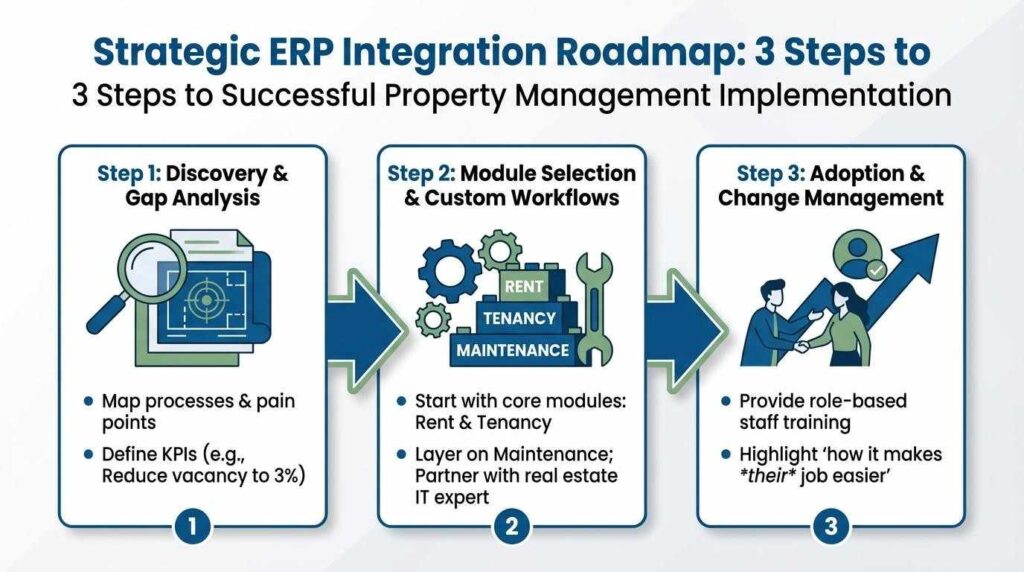
If you are unsure where to start, an ERP integration assessment helps identify which phase delivers the fastest impact for your specific portfolio.
Need Guidance on Your ERP Implementation?
Our experts can help you create a phased implementation plan tailored to your property portfolio in Bahrain and the GCC region.
What to Look for in a Real Estate ERP Setup for Bahrain and the GCC
Not every ERP fits property operations. The right setup should support real estate workflows with these key features:
Tenancy and Lease Management
Complete lease lifecycle management with automated renewal tracking, document storage, and compliance alerts tailored to GCC regulations.
Rent Management & Billing
Automated billing, receipt generation, payment tracking with support for multiple currencies common in GCC markets.
Maintenance & Vendor Management
Structured maintenance workflows, vendor performance tracking, and preventive scheduling to reduce emergency repairs.
Property-wise Finance & Reporting
Granular financial tracking per property with automated reports for owners and management teams.
Integration & Mobility
Cloud-based access, mobile approvals, and integration capabilities with existing accounting or communication tools to avoid duplicate data entry.
Frequently Asked Questions
Is ERP only for large real estate companies?
No. ERP integration benefits small and mid-sized portfolios by reducing manual work and improving control. Cloud-based solutions make ERP affordable and scalable for companies of all sizes in the GCC market.
Can ERP integrate with existing accounting or communication tools?
Yes. Modern ERP systems offer API integrations that connect with popular accounting software, email platforms, and communication tools. This reduces the need to replace systems immediately and allows for phased implementation.
Which module should be implemented first?
Most property teams start with rent tracking and billing, followed by maintenance workflows. This approach delivers quick wins in cash flow visibility while building the foundation for more advanced operational improvements.
How does ERP improve tenant experience in real terms?
Through timely automated reminders, faster issue resolution with tracked work orders, and clear communication via tenant portals. These improvements lead to higher satisfaction scores and easier renewals.
Can owners see property-wise performance easily?
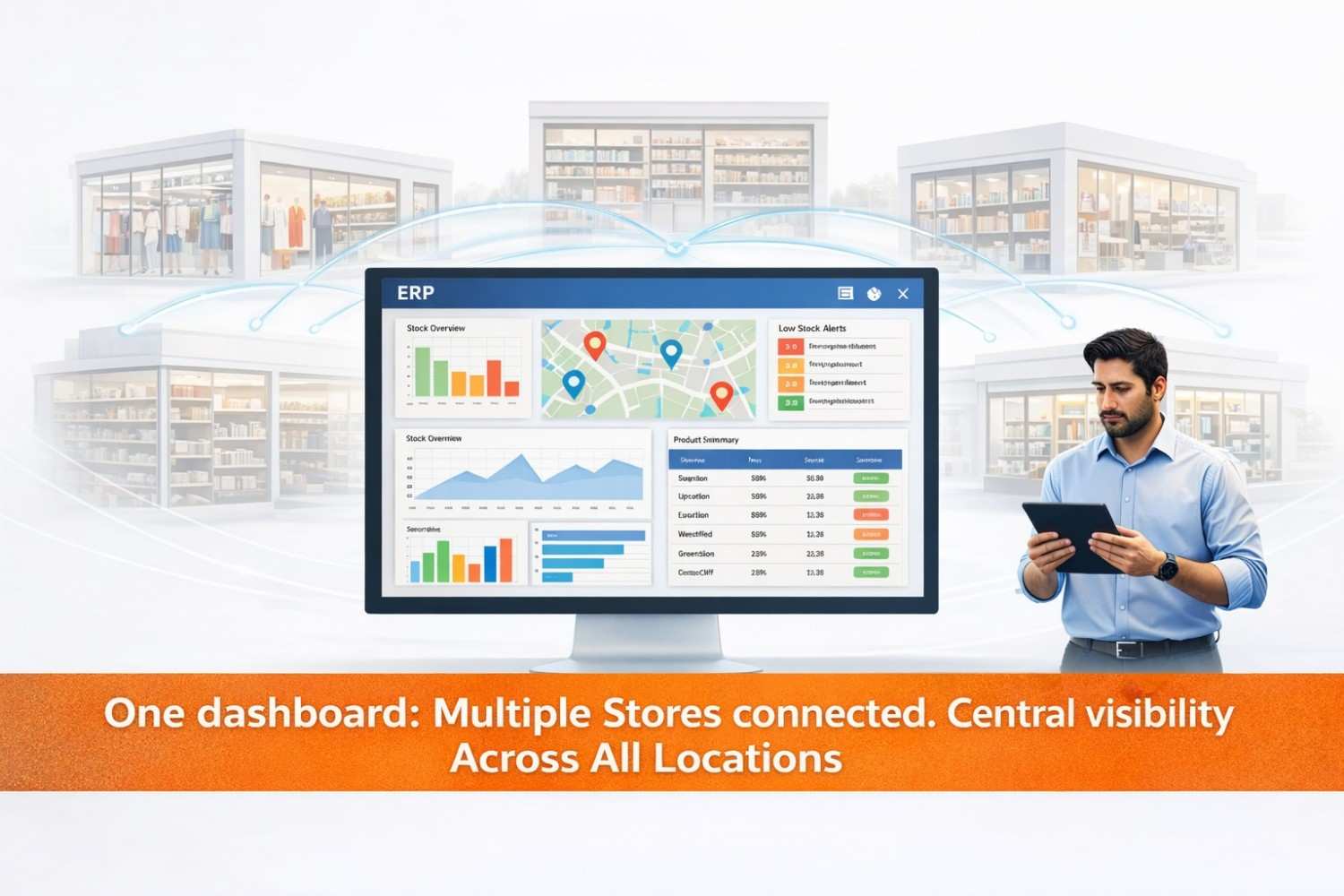
Yes. ERP dashboards provide real-time visibility into occupancy rates, rental income, maintenance costs, and profitability per property without manual reporting. Owners can access customized views from any device.
Ready to Optimize Your Property Portfolio?
Transitioning to property management ERP software is essential for moving from reactive firefighting to proactive asset management. Hornettec offers custom ERP integrations tailored for the GCC market.
Conclusion
The real value of ERP integration is not software. It is control.
With the right ERP setup:
- Rent becomes easier to track and harder to miss with automated workflows
- Maintenance becomes measurable instead of reactive with structured processes
- Tenant experience improves through clarity and consistency in communication
- Owners and managers gain faster, property-wise insights without manual reporting
For property teams in Bahrain and the GCC, ERP integration is not about complexity. It is about simplifying daily operations and building a system that scales with your portfolio.