The Digital Revolution in GCC Healthcare
Discover how integrated healthcare ERP software is revolutionizing operations in Bahrain and the wider GCC, moving beyond traditional systems to a future of clarity and efficiency. This comprehensive guide explores the challenges, solutions, and quantifiable benefits of transitioning from paper-based chaos to smart, data-driven healthcare management.
Table of Contents
Operational Paralysis in GCC Healthcare
The GCC healthcare sector faces significant challenges due to outdated systems and processes. These limitations compromise patient care, increase operational costs, and hinder growth potential in a rapidly evolving market.
Paper-based Operations
Leading to significant inefficiencies, delays, and a heightened risk of errors that compromise patient care and administrative processes.
Disconnected Software
Creating isolated data silos, preventing real-time visibility, and hindering comprehensive decision-making across departments.
Specific Liabilities
- Missed patient files and critical data gaps
- Rejected insurance claims due to manual coding errors.
- Dangerous medication stockouts due to poor inventory management.
Ready to Transform Your Healthcare Operations?
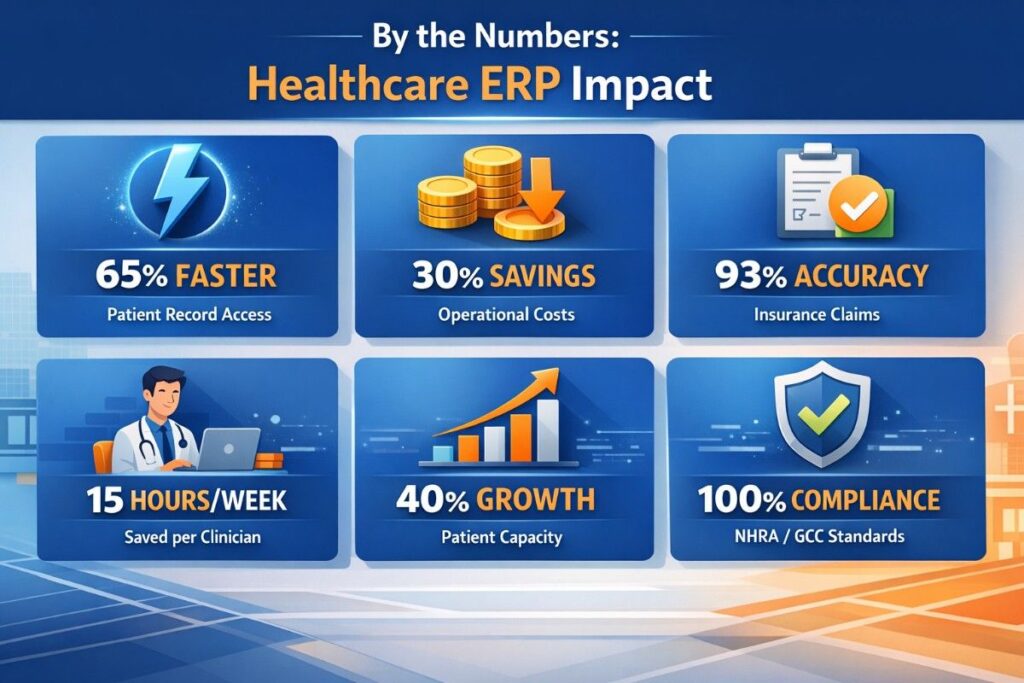
Discover how Hornet ERP can streamline your clinic or hospital management, reduce costs by up to 30%, and improve patient safety with our integrated healthcare solution tailored for the GCC market.Quick Answer: What is Healthcare ERP?
Healthcare ERP solution (Enterprise Resource Planning) is a unified software suite that integrates core clinical and non-clinical functions into a single system. This includes:
Common FMCG categories include:
Patient Administration
Finance
HR
Inventory & Procurement
Key features and benefits for GCC facilities:
- Breaks down data silos: Enables real-time data flow between departments.
- Automated compliance: Supports NHRA and VAT requirements.
- Reduced operational costs through streamlined processes.
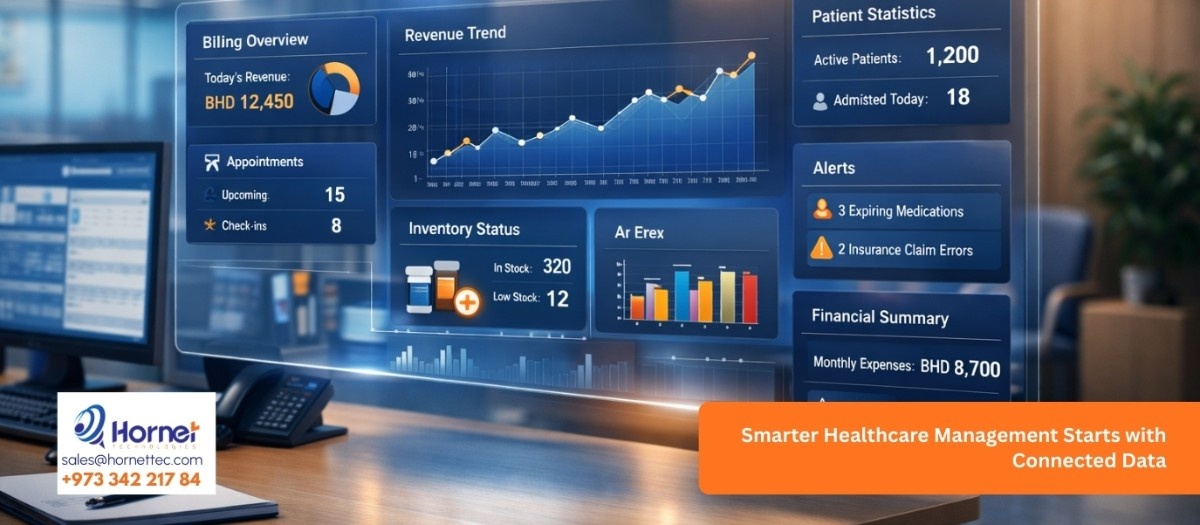
- “Smart Dashboards”: Provide instant business health visibility.
The Real Costs of Outdated Systems
Before discussing solutions, it’s important to understand where FMCG businesses struggle the most.
The Hidden Costs of Paper-Based Healthcare Operations
Human Cost
Staff spend valuable hours searching for documents instead of engaging with patients, leading to burnout and distraction from patient care.
Increased Risk of Error
Staff spend valuable hours searching for documents instead of engaging with patients, leading to burnout and distraction from patient care.
Lack of Control
Paper inventory logs cannot alert to expiring medications, and paper billing folders cannot automatically reconcile complex insurance claims.
Escalating Pressure: Operational Challenges in GCC Clinics
Growing patient volumes in the GCC exacerbate the weaknesses of manual systems, making medical ERP software a survival necessity due to specific regional pressures.
Fragmented Data
Pharmacy, billing, and scheduling often operate independently. Generating reports becomes a week-long project, delaying critical business decisions.
Billing Nightmares
Delayed invoices, high rejection rates due to manual coding errors, and complex reconciliation processes strain finance teams and impact cash flow.
Inventory Gaps
Manual tracking leads to overstocking (tying up capital) or stockouts (risking patient safety and compliance).
Beyond Reports: Why Smart Dashboards Are Essential
Smart dashboards offer real-time insights, unlike traditional reports which only detail past events, empowering proactive decision-making.
Quantifiable Benefits of Digital Systems
Research consistently demonstrates the profound impact of integrated digital systems in healthcare facilities.
Reduction in Admin Overhead
Automated processes free up staff for patient-focused activities
Improved Patient Safety
Minimized data entry errors and better medication management
Faster Billing Cycles
Automated claims processing reduces delays and rejections
Higher Patient Retention
Improved experience leads to better patient loyalty
Hornet Provides A Tailored Solution for GCC Healthcare
Hornet helps with a comprehensive healthcare ERP solution that is healthcare-ready and designed specifically for the GCC market, adeptly addressing unique regional challenges and nuances in insurance, VAT, and clinical workflows.
Finance & Accounting
Integrated with billing for seamless revenue cycle management and financial clarity. Supports VAT compliance and automated invoicing.
Inventory & Supply Chain
Features robust batch and expiry management crucial for pharmacies and medical supplies. Prevents stockouts and reduces waste.
HR & Payroll
Manages complex shift patterns and adherence to local labor laws with ease. Streamlines recruitment and employee management.
Patient Administration
Covers the entire patient journey, from initial appointment scheduling to discharge and follow-up care.
Who Benefits Most? The ROI of ERP Adoption
| Role | Pain Point (Before) | Benefit (After ERP) |
|---|---|---|
| Clinic Owner | Blind spots in profitability; theft and leakage risks. | Total control, real-time P&L visibility, scalable growth. |
| Finance Manager | End-of-month reconciliation chaos and delayed reports. | Automated reconciliation, daily financial health checks, audit readiness. |
| Operations Manager | Manually chasing staff and inventory with poor coordination. | Streamlined workflows, auto alerts for stock and staffing, efficiency focus. |
| IT Manager | Managing multiple disconnected software vendors. | One unified, secure, and scalable platform with simplified maintenance. |
The Journey to Digital: Transitioning from Paper to ERP
A structured approach is crucial for a successful transition from legacy systems or cumbersome paper files to a streamlined digital future with the right ERP integration.
1. Phased Implementation
Recommended approach: Start with core modules (e.g. Patient Admin, Billing) to minimize disruption and ensure smooth adoption. Gradually add advanced modules as users become comfortable.
2. Digitizing Existing Records
Key hurdle: Involves scanning and indexing active patient files and migrating data from legacy systems. Use this opportunity to clean and de-duplicate data before migration.
3. Training and Support
The human element: Comprehensive, role-specific training is crucial for user adoption and confidence, ensuring your team is fully equipped to leverage the new system.
Build Future-Ready Healthcare Operations
The era of paper-based healthcare management is ending. To thrive in the GCC market, facilities must adopt custom ERP systems offering speed, accuracy, and insight. Healthcare ERP software integrators like Hornet ERP solutions transforms data into a valuable asset, converting chaotic paper trails into smart dashboards that drive better care and better business.
Final Thoughts
The transition to a smart, integrated future is achievable. With the right partner and a tailored solution like Hornet ERP, GCC healthcare facilities can overcome operational paralysis, improve patient outcomes, and build a foundation for sustainable growth in the digital age.