Discover the hidden operational challenges that sink promising e-commerce ventures and how a unified ERP system builds a foundation for lasting success.
80-90%
of e-commerce businesses fail after launch
65%
failure due to operational issues
3.5x
higher success rate with integrated systems
The Hidden Truth About E-commerce Failure
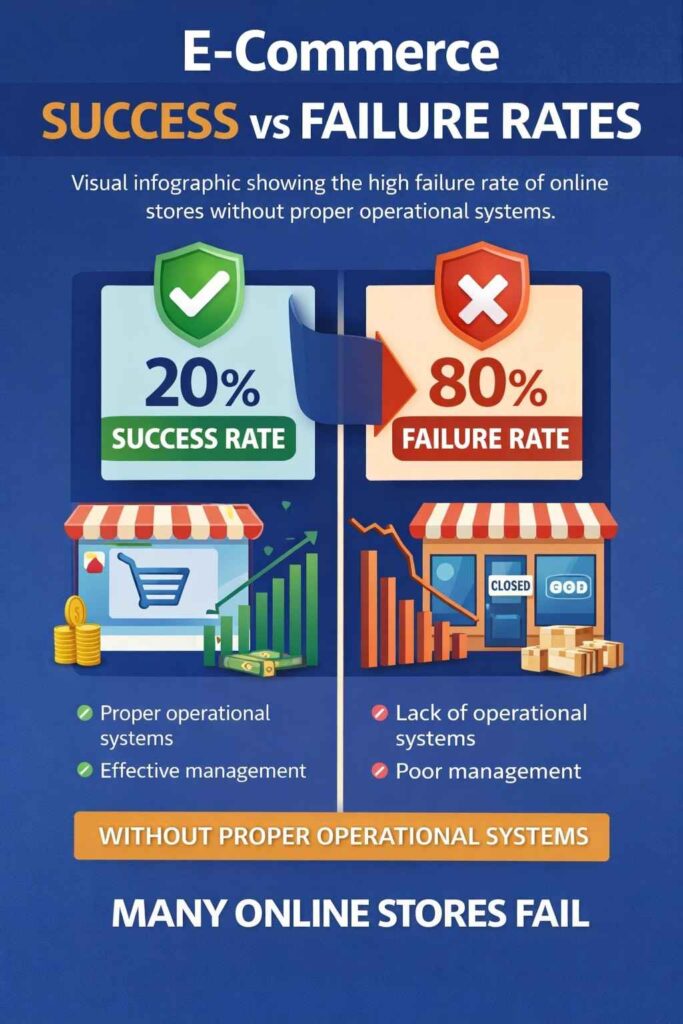
A significant majority of e-commerce businesses, estimated at 80-90%, fail after their initial launch. The primary reason for failure is not a lack of good ideas or sales, but rather the inability to manage complex backend operations.
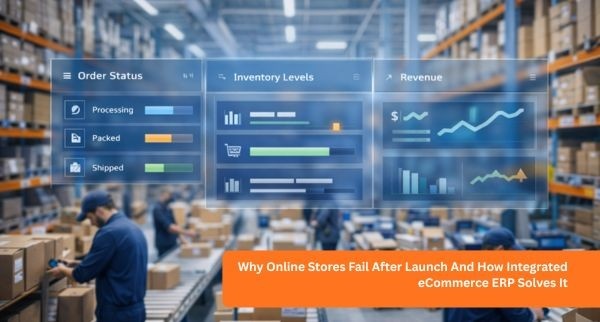
An integrated eCommerce ERP (Enterprise Resource Planning) solution offers a robust system to centralize business operations, including inventory, orders, customer data, and accounting, enabling businesses to overcome common challenges and achieve sustained growth.
The Reality After Launch: Sales Start, Problems Follow
The initial excitement of launching an online store and receiving orders quickly exposes operational weaknesses.
Orders Increase, Manual Work Multiplies
As orders grow, manual data entry, inventory checks, shipping coordination, and invoicing become overwhelming and prone to errors. What was manageable with 10 orders per day becomes chaotic with 100+.
Visibility Starts Breaking Down
Disconnected systems for sales, inventory, and accounting prevent a clear, real-time overview of operations, leading to uncertainty about stock levels and profit margins. You're running blind when you need clarity most.
Common Reasons Online Stores Fail After Launch
Behind-the-scenes operational issues are frequent culprits for e-commerce failure
-
Inventory Issues
-
Order Processing
-
Integration Gaps
-
Customer Experience
Inventory Mismatch and Stock Visibility Issues
- Website Stock Does Not Match Actual Stock:
Lack of real-time synchronization between online displays and actual inventory leads to discrepancies. - Overselling and Order Cancellations:
Inaccurate stock data results in overselling, leading to cancelled orders, customer dissatisfaction, and potential refund fees.
Manual Order Processing and Fulfillment Delays
- Orders Handled Across Multiple Tools:
Manually processing orders across sales platforms, shipping portals, and accounting software is time-consuming, error-prone, and can lead to incorrect shipments or missed orders. - Delays, Errors, and Customer Dissatisfaction:
Manual steps increase the likelihood of errors and delays, negatively impacting customer experience, leading to negative reviews and reduced repeat business.
No Integration Between Website, Inventory, and Accounting
- Separate Systems for Sales, Stock, and Finance: Siloed information across different systems prevents sales teams from knowing exact stock levels and hinders finance teams from reconciling sales with inventory costs.
- Duplicate Data Entry and Inaccurate Reports: Manual data transfer between systems wastes time, introduces errors, and makes generating accurate, real-time reports difficult, impeding informed decision-making.
Poor Customer Experience After The First Purchase
- Delayed Deliveries:
Sluggish internal processes lead to broken delivery promises. - Wrong Items or Missing Information:
System errors in picking, packing, or tracki
Your Business Facing Any of These Issues?
These operational issues are warning signs that your e-commerce business is at risk. The sooner you address them, the higher your chances of long-term success.
Why Marketing Alone Cannot Fix These Problems
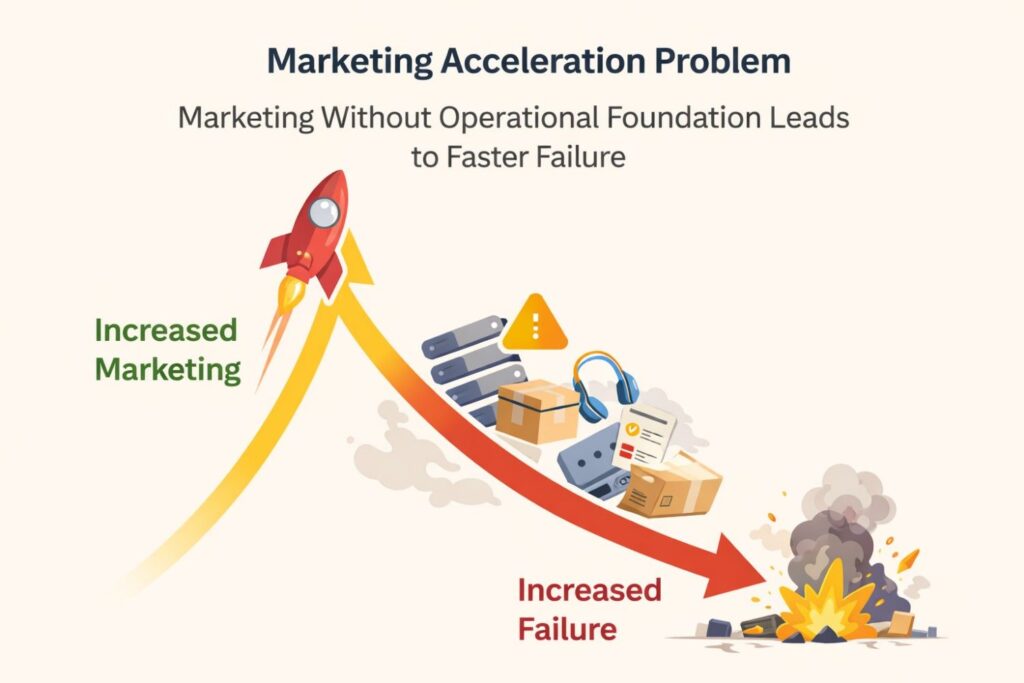
Pouring money into marketing without addressing operational issues can accelerate failure.
- More Traffic Increases Operational Pressure:
Increased website traffic and order volumes amplify existing backend weaknesses. - Scaling Without Systems Leads to Faster Collapse:
Attempting to scale an online store without robust, integrated systems exposes backend inefficiencies rapidly, turning minor glitches into major failures.
What an Integrated eCommerce ERP Really Means
An integrated eCommerce ERP system acts as the central nervous system for a business, unifying all core processes.
One System Connecting All eCommerce Operations
Orders
Consolidates all orders from various channels into a central hub.
Inventory
Provides real-time stock updates across all sales channels.
Accounting
Automates financial transactions, invoicing, and reporting, integrating with sales and inventory data.
Customers
Offers a unified view of customer interactions, purchase history, and contact information.
ERP as a Single Source of Truth
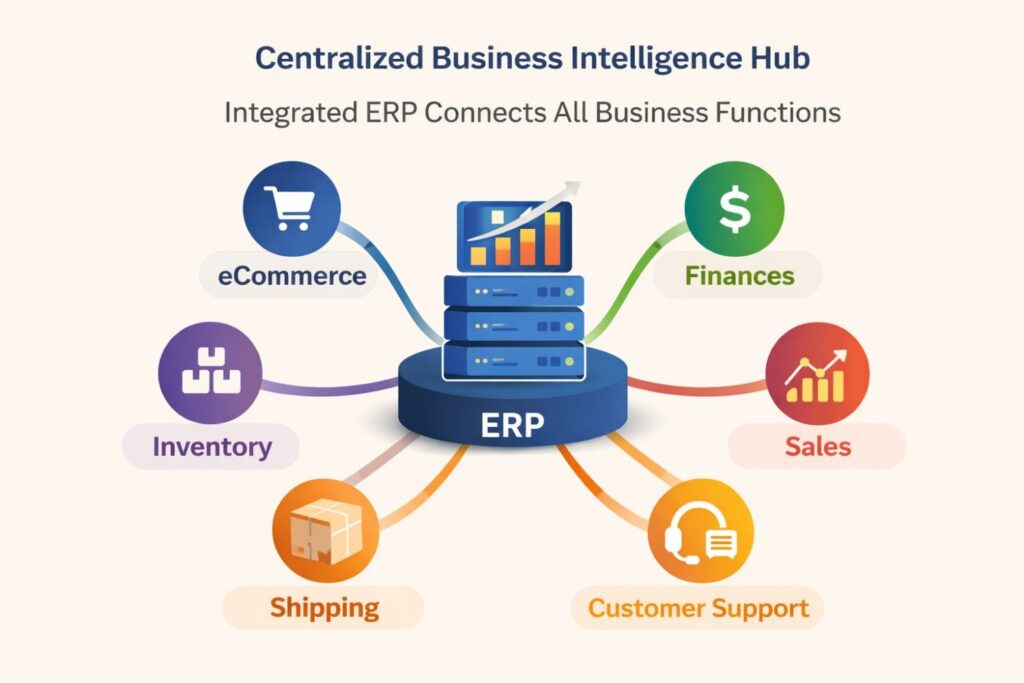
- Real-time Data Across Departments: Ensures immediate updates across inventory, sales, and accounting in real time.
- No Conflicting Numbers: Eliminates data silos and ensures all departments operate from a single, accurate data set.
How Integrated eCommerce ERP Solves Post-Launch Failures
By unifying business functions, an integrated ERP directly addresses common post-launch problems.
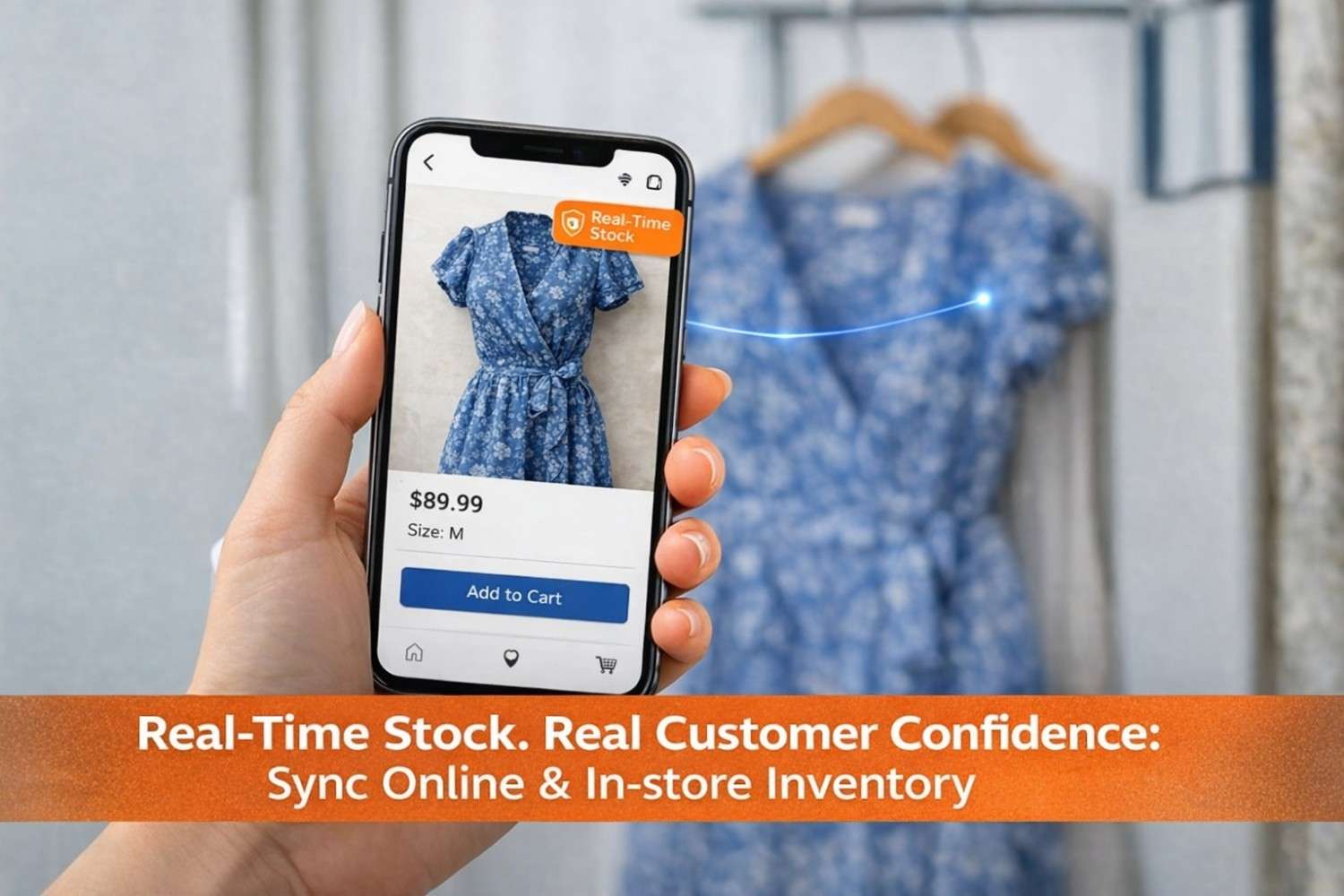
Real-Time Inventory Sync Across All Channels
Website, POS, Warehouse All Connected: Real-time updates prevent overselling and maintain accurate stock levels across all sales points.
No Overselling or Guesswork: Provides clarity on available stock, enabling confident order fulfillment and consistent customer satisfaction.
Centralized Order and Fulfillment Management
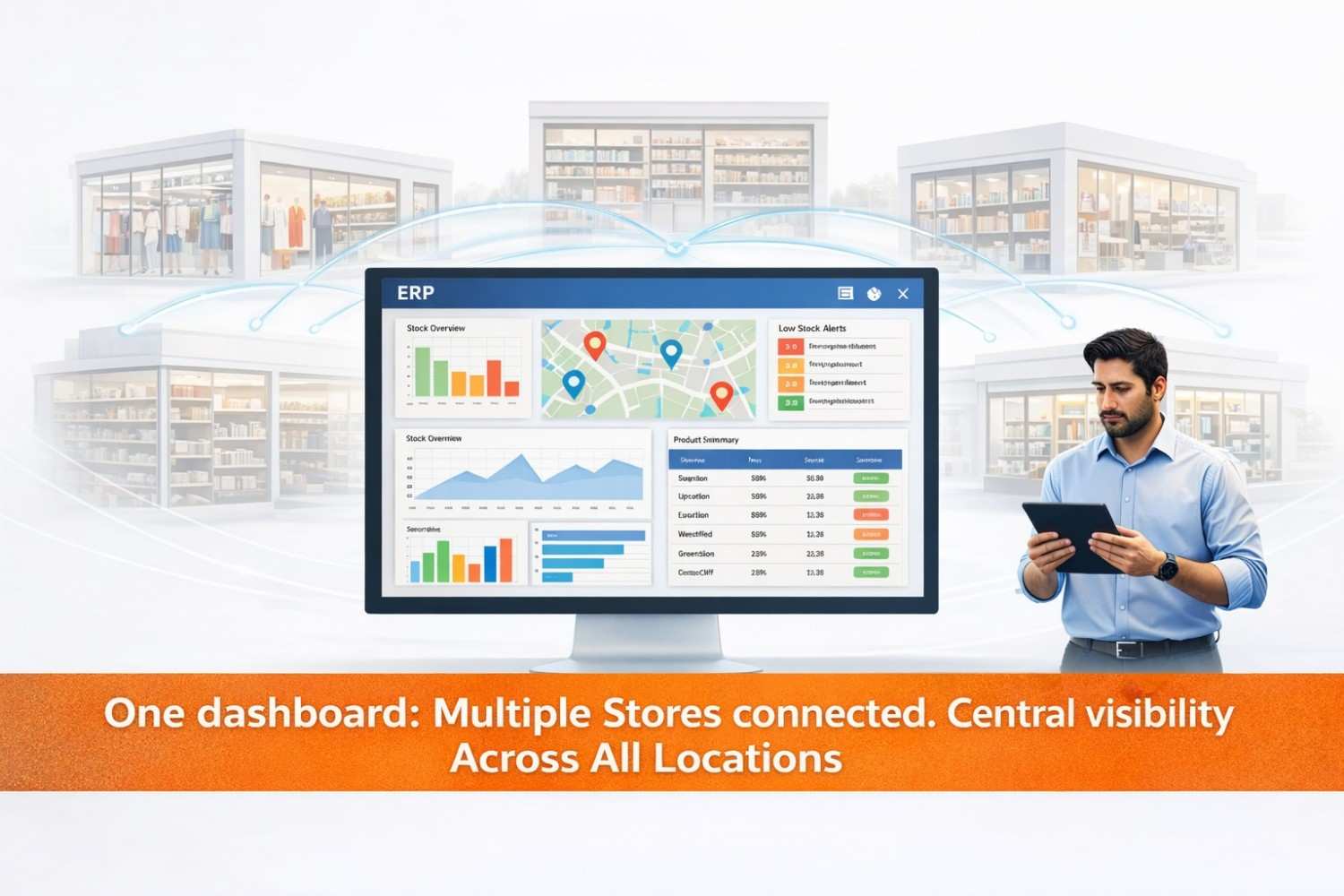
One Dashboard for All Orders: Consolidates orders from all sources into a single dashboard for simplified tracking and processing.
Faster and Accurate Dispatch: Streamlines picking, packing, and shipping through automated workflows, leading to quicker deliveries.
Automated Billing, Accounting and Reporting
Clean Financial Data: Automatically transfers sales, returns, and inventory costs to the accounting module, ensuring accuracy and reducing errors.
Easier Compliance and Audits: Simplifies tax season and financial audits with meticulously recorded transactions and provides real-time financial insights.
Scalable Operations Without Operational Chaos
Add Products, Channels, or Locations Easily: Seamlessly accommodates business expansion without system overhauls.
Systems Grow with the Business: Provides a stable foundation that evolves with the business, preventing operational bottlenecks.
Before vs After ERP Implementation
Business Area
Without ERP
With Integrated ERP
Inventory Management
✗ Manual updates, frequent overselling
✓ Real-time sync across all channels
Order Processing
✗ Multiple tools, manual entry
✓ Single dashboard, automated workflows
Customer Service
✗ No unified customer view
✓ Complete customer history & interactions
Financial Reporting
✗ Manual reconciliation, errors
✓ Automated, accurate real-time reports
Business Scalability
✗ Systems break with growth
✓ Seamlessly scales with business
Who Needs an Integrated eCommerce ERP the Most
Certain retailers benefit significantly from an integrated eCommerce ERP.
New Online Stores Struggling Post-Launch
Stabilizes operations for businesses overwhelmed by manual tasks, inventory errors, or customer complaints.
Offline Retailers Expanding Online
Unifies separate inventories, sales, and customer databases for brick-and-mortar stores venturing into e-commerce, ensuring consistent pricing and stock across channels.
Growing D2C Brands Facing Operational Bottlenecks
Provides backend efficiency for direct-to-consumer brands whose marketing outpaces operational capacity, addressing delayed fulfillments and poor customer service.
How to Choose the Right eCommerce ERP
Selecting an ERP system requires a strategic approach. Ask these critical questions:
Integration Capabilities
Does it integrate with POS and other critical tools for a unified commerce platform?
Look for an ERP that seamlessly connects with your existing e-commerce platform, POS software system, payment gateways, shipping carriers, and other essential business tools.
Real Time Synchronization
Does it support real-time data across inventory, sales, and customer information?
Real-time sync is non-negotiable for modern e-commerce. Ensure the ERP updates all systems simultaneously when changes occur.
Scalability
Is it scalable to handle increased order volumes, new products, and additional sales channels?
Your ERP should grow with your business without requiring expensive migrations or complex reimplementations.
Support and Training
What kind of support and training is available for smooth implementation and usage?
Look for vendors with comprehensive onboarding, ongoing support, and training resources to ensure your team can maximize the ERP's capabilities.
Total Cost Of Ownership
What are the full costs, including implementation, customization, and ongoing maintenance?
Consider not just the subscription cost but also implementation fees, customization charges, and any additional modules you might need.
Need Help Choosing the Right ERP?
Download our free checklist: “10 Critical Questions to Ask Before Selecting an eCommerce ERP”
Conclusion
Online store failures are typically due to inadequate operational systems, not poor ideas or products. Implementing an integrated eCommerce ERP builds a strategic operational backbone that supports sustainable growth by centralizing data, automating tasks, and providing real-time visibility.
Investing in a unified commerce platform early provides the foundation for consistent success and long-term thriving.
Key Takeaway:
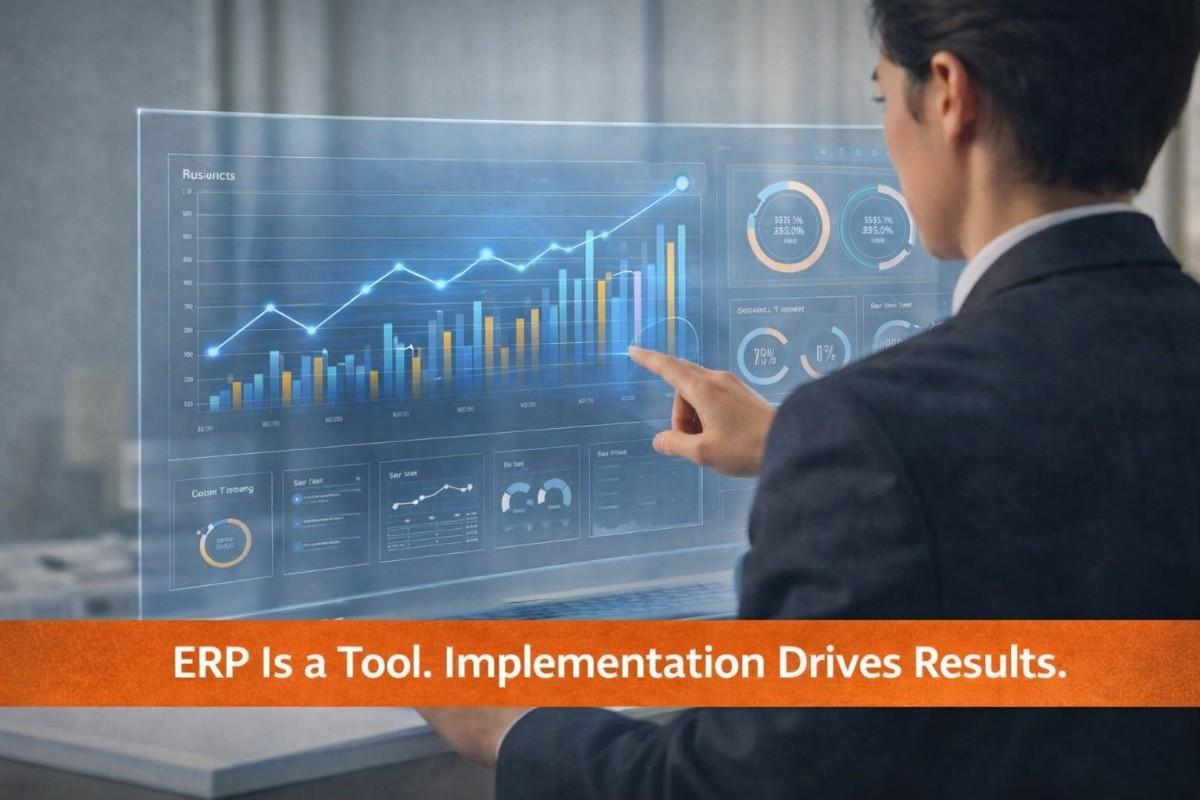
The most successful e-commerce businesses treat their operational infrastructure with the same strategic importance as their marketing and product development.
Ready to Transform Your Operations?
Stop struggling with disconnected systems and manual processes. Discover how an integrated eCommerce ERP can stabilize your business, eliminate errors, and set you on a path to sustainable growth.
Speak with our eCommerce experts to identify your operational gaps