Construction budgets rarely fail overnight. They slip little by little. A missed material entry. A late procurement approval. A small measurement error. By the time project owners and contractors notice the pattern, margins are already gone.
If you build residential towers, villas, commercial spaces or industrial projects, you know how easy it is for costs to drift without warning. And the biggest reason is simple. The data you need to control costs is scattered everywhere.
This is where a Construction ERP Software acts like your “control tower”, helping contractors and developers track every activity, every material and every rupee spent. Let’s break it down in a simple way.
Why Construction Budgets Go Off Track
Cost overruns are usually not caused by one big issue. They accumulate from many small and unmanaged gaps.
- Inaccurate or outdated project estimates – Estimations are often done on spreadsheets or old BOQs. Without historical cost data and rate benchmarks, estimates become unrealistic.
- Scope changes without financial impact tracking – Variations happen. But when they are not mapped immediately to cost and timeline, projects drift.
- Delayed manual procurement – Price fluctuations, duplicate orders, last-minute purchases and supplier delays create financial leakage.
- Poor on-site material monitoring – Materials reach the site. But real consumption is often not recorded in real time. This results in wastage, pilferage and mismatch with the BOQ.
- Fragmented reporting – Every team uses its own tool. Finance, site engineers, supervisors and procurement teams never see the same data.
Together, these gaps pull the project away from your target cost.
The Real-World Impact of Construction Cost Overruns
Contractors often underestimate how severely overruns affect long-term profitability. Here are credible, recent industry statistics.
Key Global Construction Cost Overrun Statistics
These numbers clearly show why budget deviations are a systemic issue, not an isolated one.
How These Overruns Affect Contractors and Developers
This is why most contractors are now shifting to
Construction ERP Software.
Learn How Hornet Technologies can help with Construction Industry Software Implementation & Integration
Where Construction ERP Software Fits In
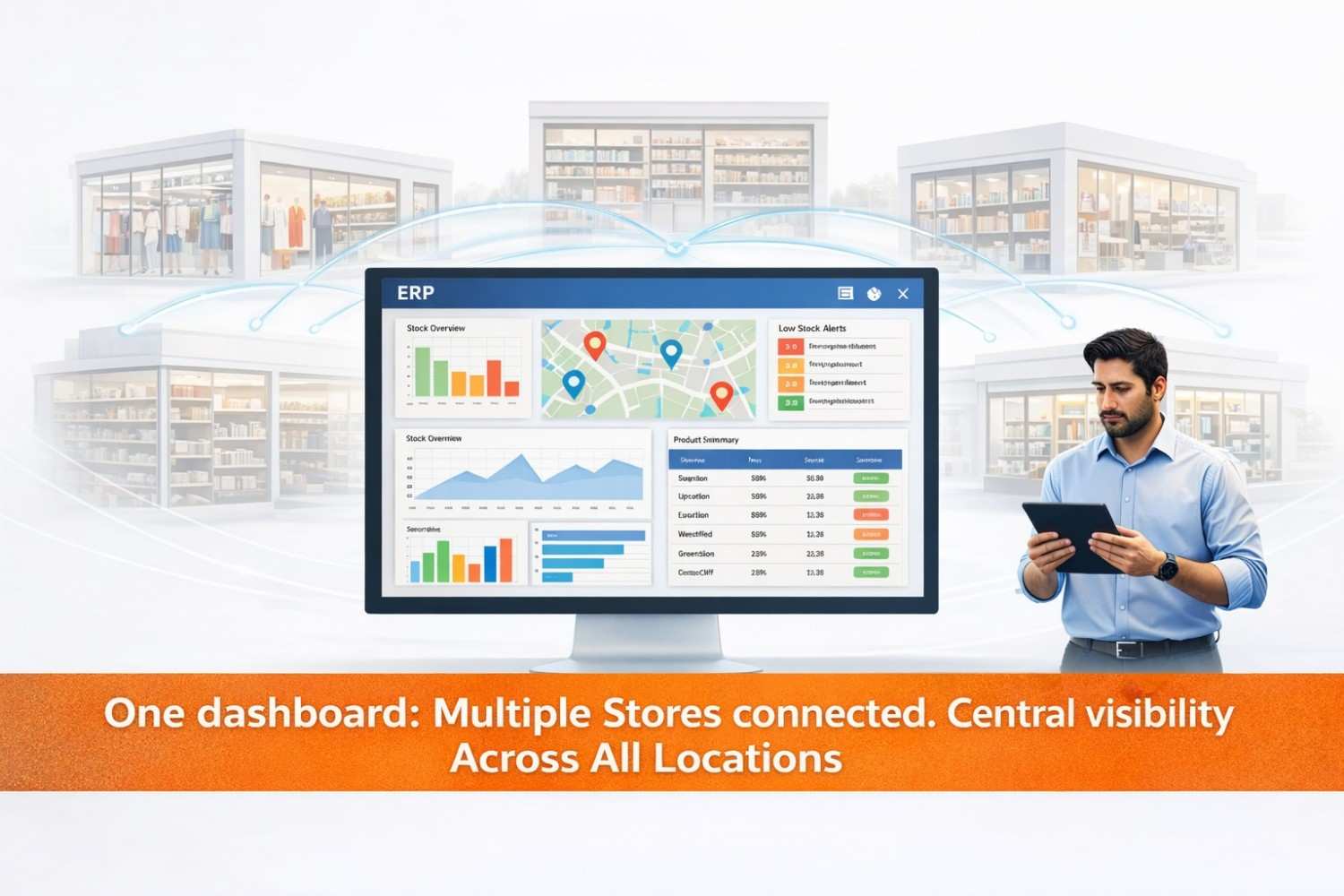
A Construction ERP brings everything into one place. Planning, materials, procurement, finance, labour, equipment and reporting. That means no more blind spots.
1. Real-time Project Cost Tracking
You can see estimated cost vs actual cost instantly. When a cost crosses its limit, the system alerts you.
2. BOQ-Linked Estimation
BOQs become live documents. Any change in quantity or rate is reflected across procurement, inventory and finance.
3. Material Tracking Across Every Site
Materials are logged as soon as they enter and leave the site. You get visibility of stock, consumption, wastage and transfers.
4. Smart Procurement
Compare vendor prices, track pending POs, automate approvals and lock rates to avoid surprises.
5. Centralized Dashboards
Project managers, accountants and owners get dashboards tailored to their roles.
How Hornet’s ERP Helps Construction Firms Stay Within Budget
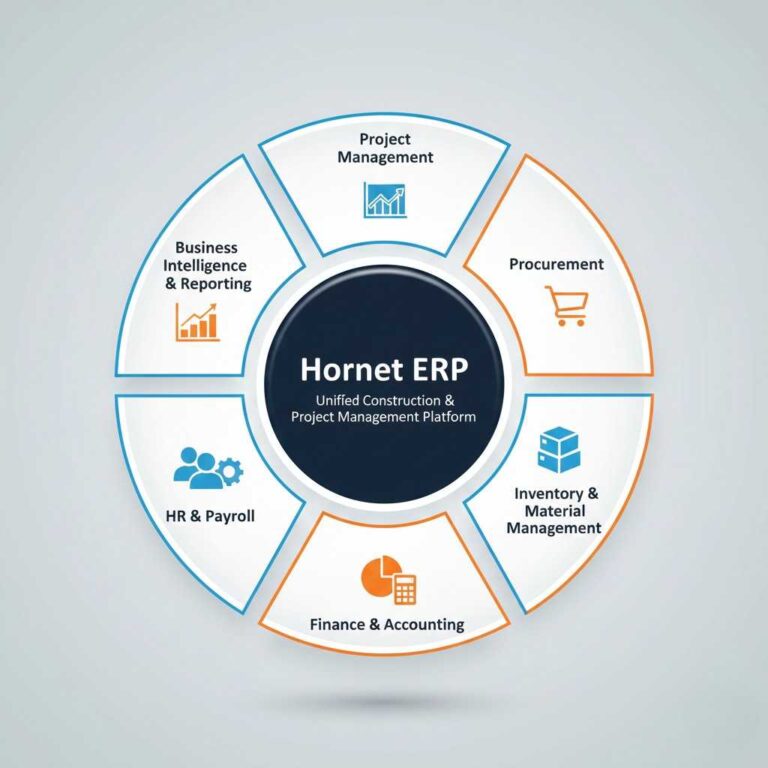
Hornet ERP is designed to remove the exact issues that create cost overruns in construction projects. It connects your BOQs, materials, labour, tasks and finances in real time.
Benefits of Implementing a Construction ERP
Better forecasting. You know future cash needs, material requirements and labour demands.
Lower material wastage. Consumption vs BOQ is monitored continuously.
Faster execution with fewer delays.
Higher transparency across vendors, supervisors and owners.
Improved profit margins because leakages are spotted early.
Lorem ipsum dolor sit amet, consectetur adipiscing elit. Ut elit tellus, luctus nec ullamcorper mattis, pulvinar dapibus leo.
The Future of Construction Cost Monitoring
Construction firms are moving towards digital workflows, predictive tools and AI-supported planning.
Why Hornet Technologies Is a Reliable ERP Partner?
10+ years of implementation experience
Industry-ready modules
250+ successful projects
Cloud, on-premise and hybrid deployment
Dedicated support and training teams
Conclusion
Construction projects don’t go over budget because teams lack skill. They go over budget because teams lack visibility. When data is scattered, decisions get delayed. When decisions get delayed, costs rise.
A ERP implementation & Integration provider like Hornet gives contractors the clarity, accuracy and control needed to deliver projects profitably. With connected BOQs, materials, finance and procurement, managing project costs becomes simpler and far more predictable.
If you want to reduce cost overruns and get real-time control over your projects, this may be your best next step.