Walk into any retail store, and you’ll notice one of two things – empty shelves where popular items should be or piles of unsold stock taking up space. Both are symptoms of inventory chaos. Retail chains often lose sales, waste money, and frustrate customers because of stock mismanagement.
Inventory chaos happens when retailers can’t track what they have, where it is, or when to restock. Without a proper system, even large businesses struggle to keep shelves full and finances healthy. The result is missed opportunities, wasted capital, and unhappy customers.
What Is Retail Inventory Management?
Retail inventory management is the process of tracking, organizing, and controlling stock across stores and warehouses. It ensures you have the right products, in the right quantity, at the right time.
When done right, it brings balance between customer demand and stock availability, avoiding both stockouts and overstock. Modern retail success depends heavily on how efficiently you manage this balance.
Why Is Inventory Management Crucial for Retail Chains?
Improved Customer Satisfaction
When inventory is managed well, customers find what they need – boosting sales and loyalty.
Reduced Costs
Prevents overstocking and wasted storage expenses.
Better Cash Flow
Prevents overstocking and wasted storage expenses.
Fewer Emergencies
No more last-minute reorders or shipment delays.
Efficient Operations
Streamlines daily processes, cutting down time spent fixing errors.
Higher Profitability
Well-managed inventory means fewer losses and more consistent margins.
Common Inventory Challenges Retailers Face
1. Inaccurate Demand Forecasting
Predicting customer demand is tricky. A wrong forecast means popular products sell out while others gather dust.
📊 Stat Box: Less than 50% of sales leaders are confident in their forecasts (Gartner, 2024).
2. Lack of Real-Time Visibility
Disconnected systems cause blind spots between stores, warehouses, and online platforms. Without live updates, it’s impossible to know exact stock levels.
📊 Stat Box: Only 9% of retailers have full supply chain visibility; 63% struggle with limited tracking (ChainStoreAge, 2025).
3. Supply Chain Disruptions
Unreliable suppliers, global shipping delays, or weather events can all cause stockouts. Most businesses still respond reactively instead of planning ahead.
📊 Stat Box: Just 26% of retailers have proactive supply chain systems (Meteorspace, 2025).
4. Manual Errors and Inefficient Operations
Manual entries, outdated spreadsheets, and human mistakes lead to inaccurate records. These errors waste hours and hurt accuracy.
📊 Stat Box: 43% of warehouses face picking and counting errors due to manual tracking (Meteorspace, 2025).
5. Inventory Shrinkage
Theft, damage, and poor paperwork cause huge losses every year. Even small mistakes in records can distort data.
📊 Stat Box: Retailers lost $142 billion globally to shrinkage in 2023 — a 25% rise from 2022 (Wall Street Journal Report).
6. Outdated Systems and Poor Integration
Legacy systems don’t communicate across departments. This leads to duplicate data, delayed decisions, and missed sales.
📊 Stat Box: Over 50% of retailers report their stock data is less than 80% accurate due to poor integration (The State of the Supply Chain, RSR).
The Cost of Poor Inventory Management
Even small inventory mistakes can have big consequences. Poor management doesn’t just cause stress – it hits your sales, customer experience, and bottom line.
1. Lost Sales and Revenue
When products aren’t available, customers leave and often don’t come back. Every stockout means a missed sale and a lost customer opportunity.
📊 Stat Box: Global retailers lost about $1.7 trillion in 2024 due to out-of-stocks and overstocks (RetailWire).
2. Excess Inventory Costs
Too much stock ties up cash and adds storage and insurance costs. Over time, unsold or expired products quietly eat into profit margins.
3. Customer Dissatisfaction and Brand Churn
Repeated stockouts damage your reputation and push shoppers toward competitors. When trust breaks, even loyal customers may switch brands.
4. Operational Inefficiencies
Manual tracking, poor integration, and constant rechecks waste valuable staff time. This also increases human errors and delays across departments.
📊 Stat Box: Retailers using inventory automation see 2.5× higher profit growth than those relying on manual systems (RetailWire).
5. Shrinkage and Write-Offs
Losses from theft, spoilage, or poor tracking directly cut into profit. Without real-time monitoring, you lose money on products that never reach the shelf.
From Chaos to Clarity: How to Fix Inventory Issues
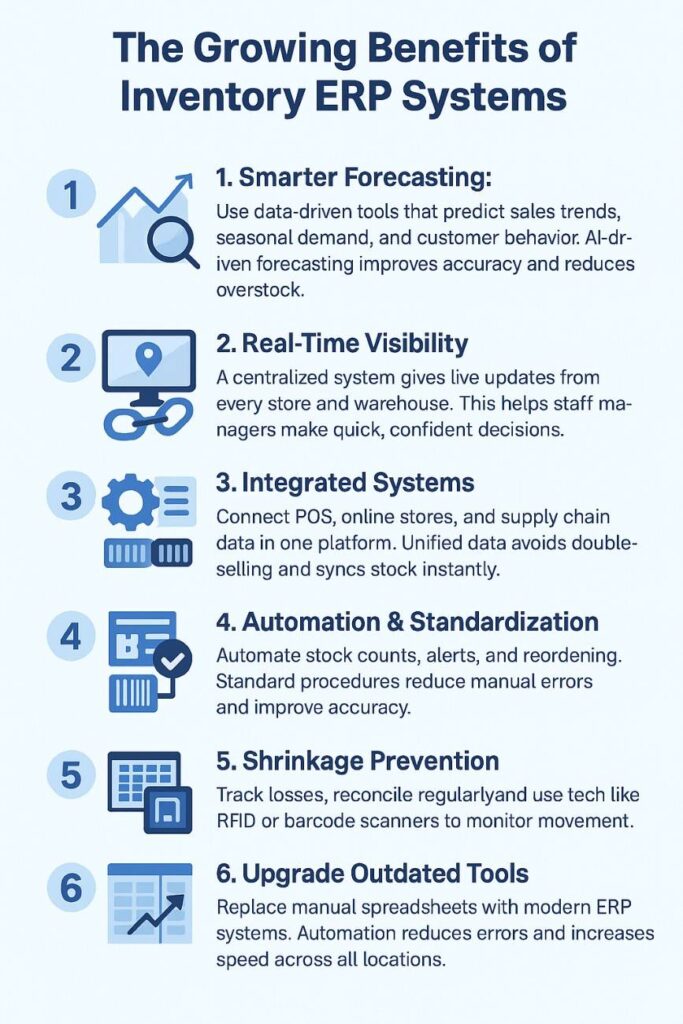
If you’re reading this and thinking, “Yes, we have all these problems — so what’s the fix?”, you’re not alone. The solution to inventory chaos is a combination of process improvement and technology. In practical terms, retail chains are overcoming these challenges by adopting smarter strategies and tools that give better visibility, accuracy, and control. Here’s how you can start turning things around:
-
Smarter Forecasting:
Use data-driven tools that predict sales trends, seasonal demand, and customer behavior.
AI-driven forecasting improves accuracy and reduces overstock.
-
Real-Time Visibility:
A centralized system gives live updates from every store and warehouse.
This helps staff and managers make quick, confident decisions.
-
Integrated Systems:
Connect POS, online stores, and supply chain data in one platform.
Unified data avoids double-selling and syncs stock instantly.
-
Automation & Standardization:
Automate stock counts, alerts, and reordering.
Standard procedures reduce manual errors and improve accuracy.
-
Shrinkage Prevention:
Track losses, reconcile regularly, and use tech like RFID or barcode scanners to monitor movement.
-
Upgrade Outdated Tools:
Replace manual spreadsheets with modern ERP systems.
Automation reduces errors and increases speed across all locations.
Mini Case: Fashion Retailer Transforms Stockouts into Sales
Company: BrightTrend Fashions – a mid-sized apparel chain with 12 stores and an online shop.
Challenges
- BrightTrend faced frequent stockouts of trending products and excess stock of slow-moving items.
- Inventory data was scattered across stores, making it hard to know what was available elsewhere.
- Their old software couldn’t handle omnichannel sales or provide real-time updates.
- Forecasting was done manually, leading to missed fashion trends and high dead stock every season.
Hornet’s Solution
- Hornet Technologies implemented a custom ERP system designed for retail inventory control.
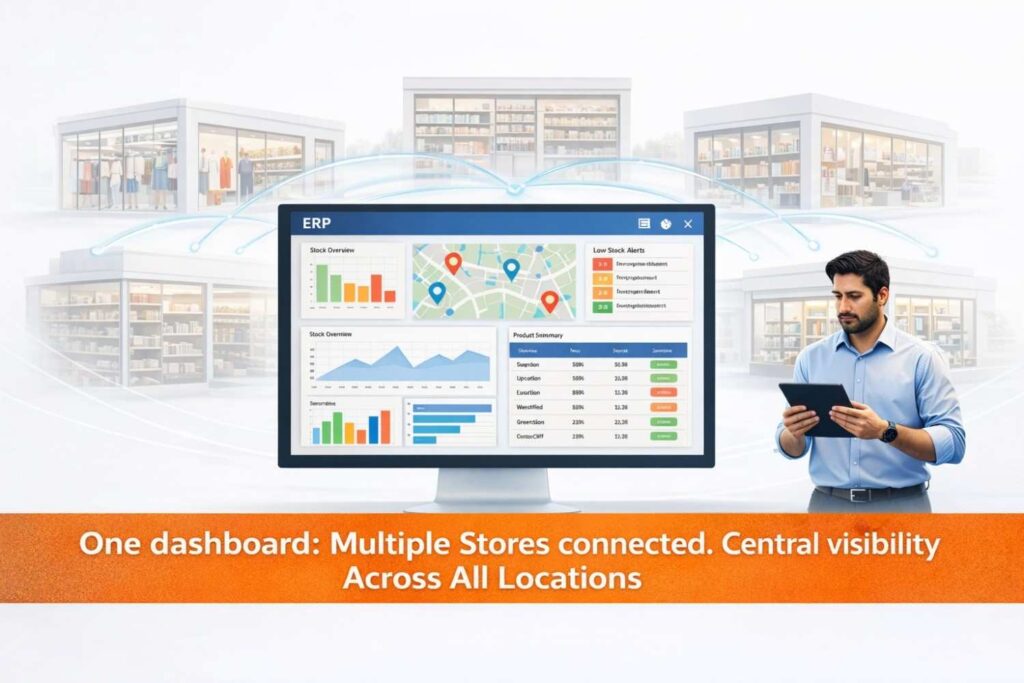
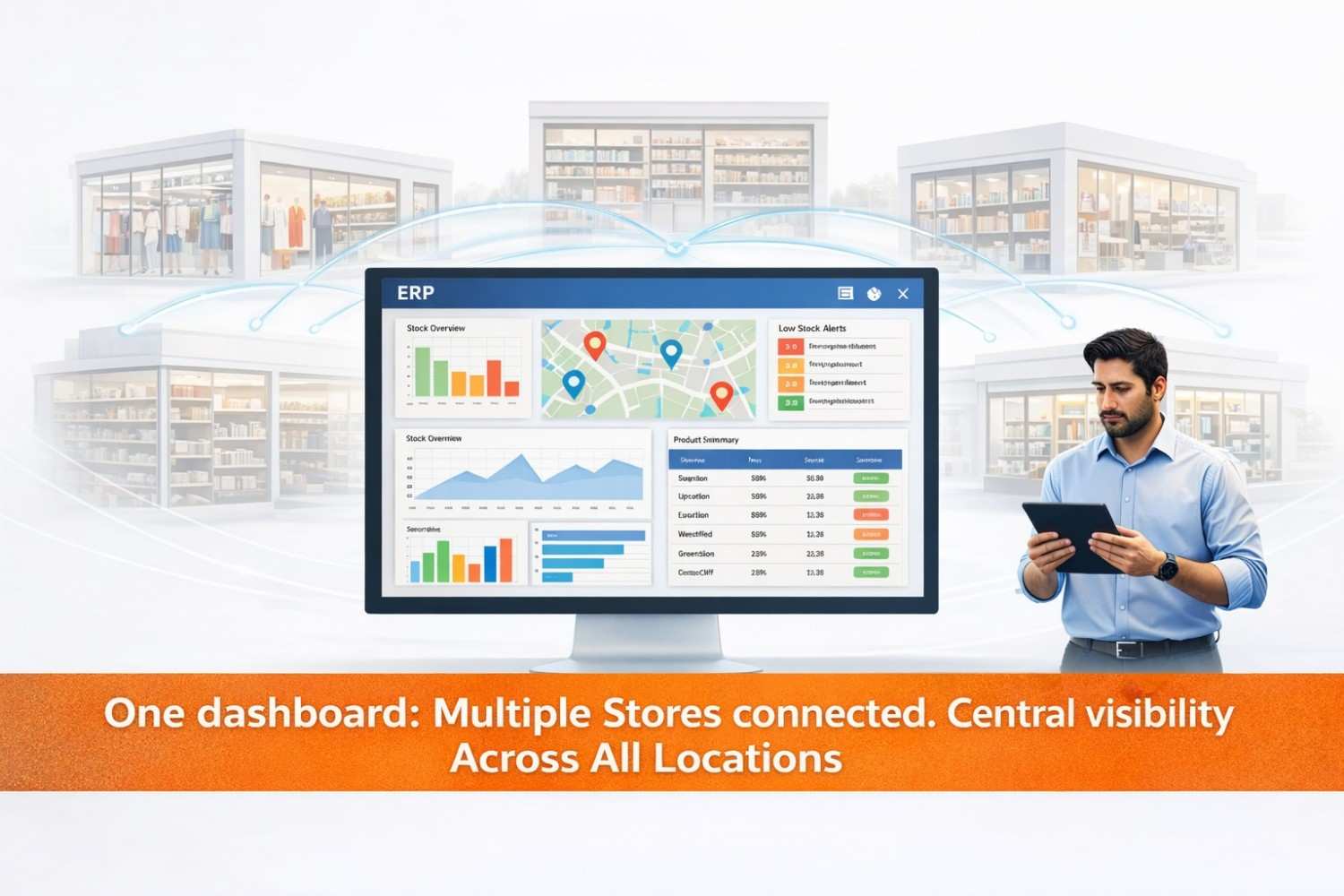
- The solution offered real-time tracking across all stores and the online platform from one dashboard.
- POS systems were integrated with inventory management, ensuring instant stock updates for every sale or return.
- Hornet added an AI-driven forecasting module that analyzed sales history and Google Trends for demand prediction.
- Store staff began using Hornet’s mobile app for stock counts, reducing manual errors and syncing data instantly.
Results Achieved
- Stockouts of top-selling items dropped by 40% within the first few months.
- Inventory turnover improved, as excess stock was cleared using data-driven promotions.
- Overall sales rose by 15% in the next quarter due to better product availability.
- Store managers spent less time managing stock issues and more time focusing on customers.
- The COO shared, “It’s like night and day — we finally have visibility. We act before shelves go empty.”
How Hornet Technologies Helps Fix Inventory Chaos
To truly overcome inventory chaos, you may need a robust partner and solution. Hornet Technologies specializes in exactly this: helping retail businesses regain control and clarity through our custom ERP and inventory management solutions.
1. Real-Time Inventory Tracking
Hornet’s ERP gives instant visibility into stock levels across every store and warehouse. Any sale, return, or receipt updates immediately, helping you act fast and avoid surprises.
→ Live inventory updates from Hornet POS prevent both stockouts and overstocking.
2. Centralized Dashboard & Data
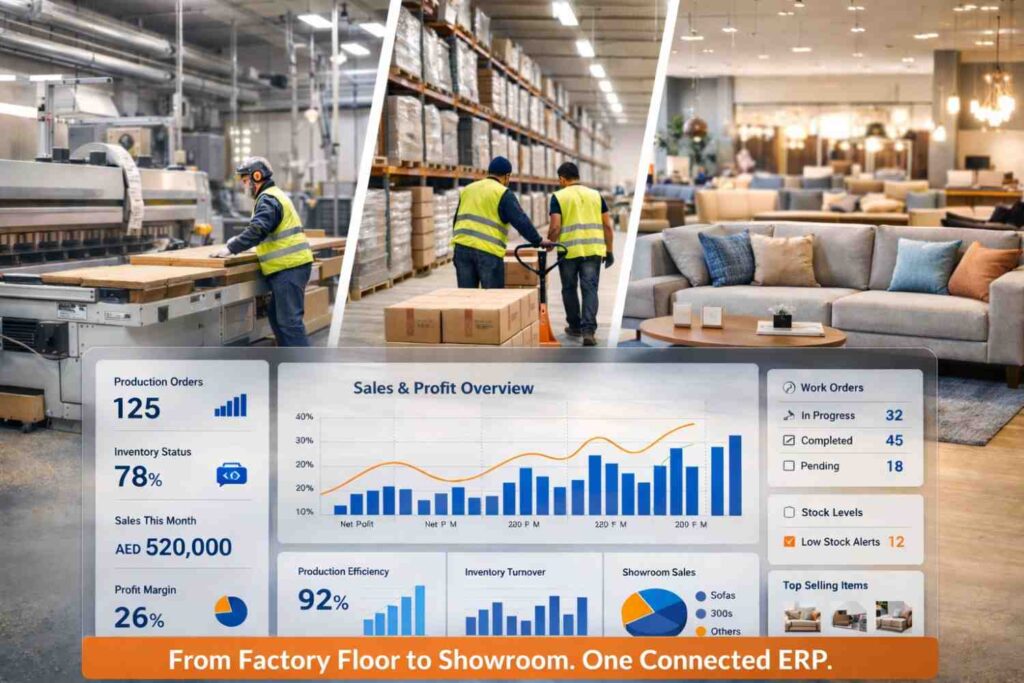
All inventory data — from stores and online channels — appears in one dashboard. This unified view helps teams track trends, detect issues, and make decisions based on the same real-time facts.
→ Retailers using Hornet ERP report complete visibility across multi-branch operations.
3. Warehouse & Multi-Location Support
Hornet ERP manages stock transfers, warehouse picking, and restocking between locations. You can track batches, use barcode/RFID tools, and even automate transfers before new orders are raised.
→ Multi-location intelligence ensures no store runs out while another sits on excess stock.
4. Forecasting & Replenishment Automation
The system predicts demand using sales history and seasonal data, then automates replenishment orders. This ensures smoother stock flow and reduces manual ordering errors.
→ One Hornet client saw major accuracy gains after switching to automated reordering.
5. Seamless Integration Across Systems
Hornet integrates with POS, e-commerce, and logistics tools so every sale and shipment updates inventory instantly. You can manage in-store and online operations from one place without manual syncing.
→ Omnichannel retailers using Hornet ERP manage sales and stock confidently across all platforms.
6. Easy Customization & Support
Hornet’s ERP adapts to your workflows instead of forcing you to fit a preset mold. Our team offers full support and training, ensuring a smooth transition and long-term efficiency.
→ Partnering with Hornet means gaining a long-term ally in improving accuracy and profitability.
Conclusion
Inventory chaos isn’t just a retail inconvenience it’s a profit drain. The right tools and systems can turn confusion into control. Stockouts, overstock, and messy data eat into profits and customer trust, but the good news is, it can be fixed. When your inventory runs right, everything else in your business does too — fewer errors, lower costs, and happier customers.
With smart ERP tools, retailers now have a simple way to get control back. Real-time tracking, automated forecasting, and connected systems can take your accuracy from 60% to nearly 100%. It’s all about having the right information at the right time.
If your stores are still fighting inventory issues, don’t wait for the next stockout to take action. Book a free consultation with Hornet Technologies and see how our ERP can bring order, accuracy, and calm to your operations. Start now, your shelves, your team, and your profits will all thank you.
FAQs