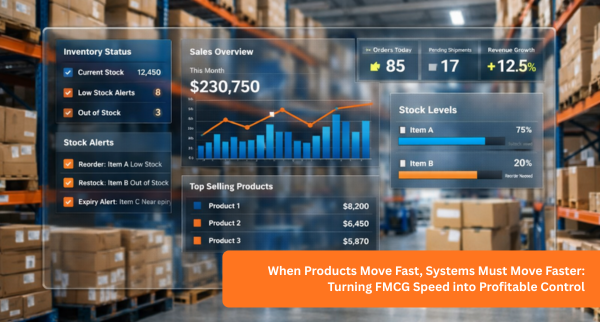
In the FMCG world, speed is everything. Products move fast, margins stay tight, and customer expectations never slow down. Yet many FMCG businesses still rely on disconnected systems, spreadsheets, and manual processes to run daily operations.
This gap between how fast goods move and how slow systems respond is where most operational losses begin. An integrated ERP system helps FMCG businesses bridge this gap by bringing visibility, control, and speed under one unified platform.
The Reality of FMCG. High Speed, High Stakes
The FMCG industry operates on a unique rhythm. Decisions are made daily, sometimes hourly, and even small inefficiencies can scale into significant losses.
For FMCG businesses in Bahrain and across the GCC, this pressure is even higher due to:
- Multi-location distribution networks
- Scope changes without financial impact tracking – Variations happen. But when they are not mapped immediately to cost and timeline, projects drift.
- High dependency on imports and logistics
- Regulatory and VAT compliance requirements
- Growing competition from organized retail and e-commerce
When operations are fragmented, speed turns into chaos instead of growth.
What Is FMCG?
FMCG stands for Fast-Moving Consumer Goods. These are everyday products that sell quickly and are replaced frequently.
Common FMCG categories include:
What makes FMCG different is not just volume, but velocity. Products move fast, shelf life is limited, and pricing flexibility is minimal. This makes operational efficiency critical for survival, not just growth.
Key Challenges Faced by FMCG Businesses
Before discussing solutions, it’s important to understand where FMCG businesses struggle the most.
Inventory Management Issues
- Overstocking increases holding costs and expiry losses.
- Stockouts lead to lost sales and distributor dissatisfaction.
- Manual tracking fails across multiple warehouses and outlets.
Complex Supply Chain Structures
- Multiple suppliers, distributors, vans, and retail outlets.
- Limited real-time visibility across the chain.
- Delayed information causes reactive decision-making.
Sales and Distribution Inefficiencies
- Disconnected billing and order systems.
- Manual order processing increases errors.
- Field and van sales lack real-time stock updates.
Thin Margins and Cost Pressures
- FMCG operates on low profit margins by design.
- Even minor inefficiencies directly affect profitability.
- Lack of cost visibility makes margin control difficult.
$1.7 Trillion
Estimated annual cost of “inventory distortion” (overstocks and out-of-stocks) in the global retail and FMCG industry
Source: IHL Group
Why Traditional Systems No Longer Work for FMCG
Many FMCG businesses still depend on:
- Standalone billing software
- Excel-based inventory tracking
- Separate accounting tools
- Manual coordination between teams
These systems may work at a small scale, but they break down as operations grow.
The Result of Traditional Systems:
-
Data silos across departments – Sales, inventory, finance, and distribution operate on separate systems, making it difficult to access accurate, unified information when decisions need to be made.
-
Delayed reporting and poor visibility – Reports are generated manually or after the fact, which means leaders are always reacting to problems instead of preventing them.
-
Repetitive manual work – The same data is entered multiple times across tools, increasing workload, slowing operations, and raising the risk of human error.
-
Higher dependency on individuals instead of systems – Critical knowledge remains with specific employees, so operations slow down or break when key people are unavailable or leave the organization.
In a fast-moving industry, this delay becomes a liability, directly impacting efficiency, profitability, and customer satisfaction.
Is Your FMCG Business Struggling with Disconnected Systems?
Don’t let manual processes and data silos slow down your operations. Discover how an integrated ERP can transform your FMCG business.
What Does an Integrated ERP Mean for FMCG?
An integrated ERP system brings all core FMCG operations into one connected platform.
This includes:
- Sales
- Inventory
- Warehousing
- Distribution
- Finance and compliance
- Reporting and analytics
Instead of data moving manually between systems, information flows automatically in real time. This allows FMCG businesses to respond faster and operate with control.
How ERP Improves FMCG Profitability
ERP adoption has a direct impact on profitability when implemented correctly.
Key Benefits of an Integrated ERP for FMCG Businesses
A Construction ERP brings everything into one place. Planning, materials, procurement, finance, labour, equipment and reporting. That means no more blind spots.
1. Real-Time Inventory Visibility
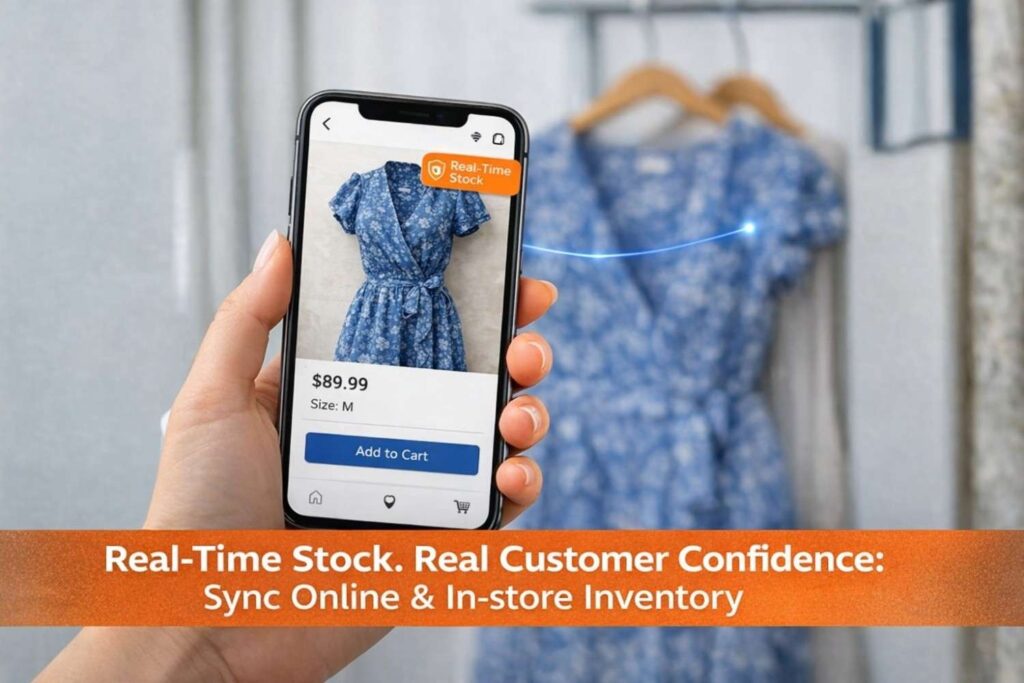
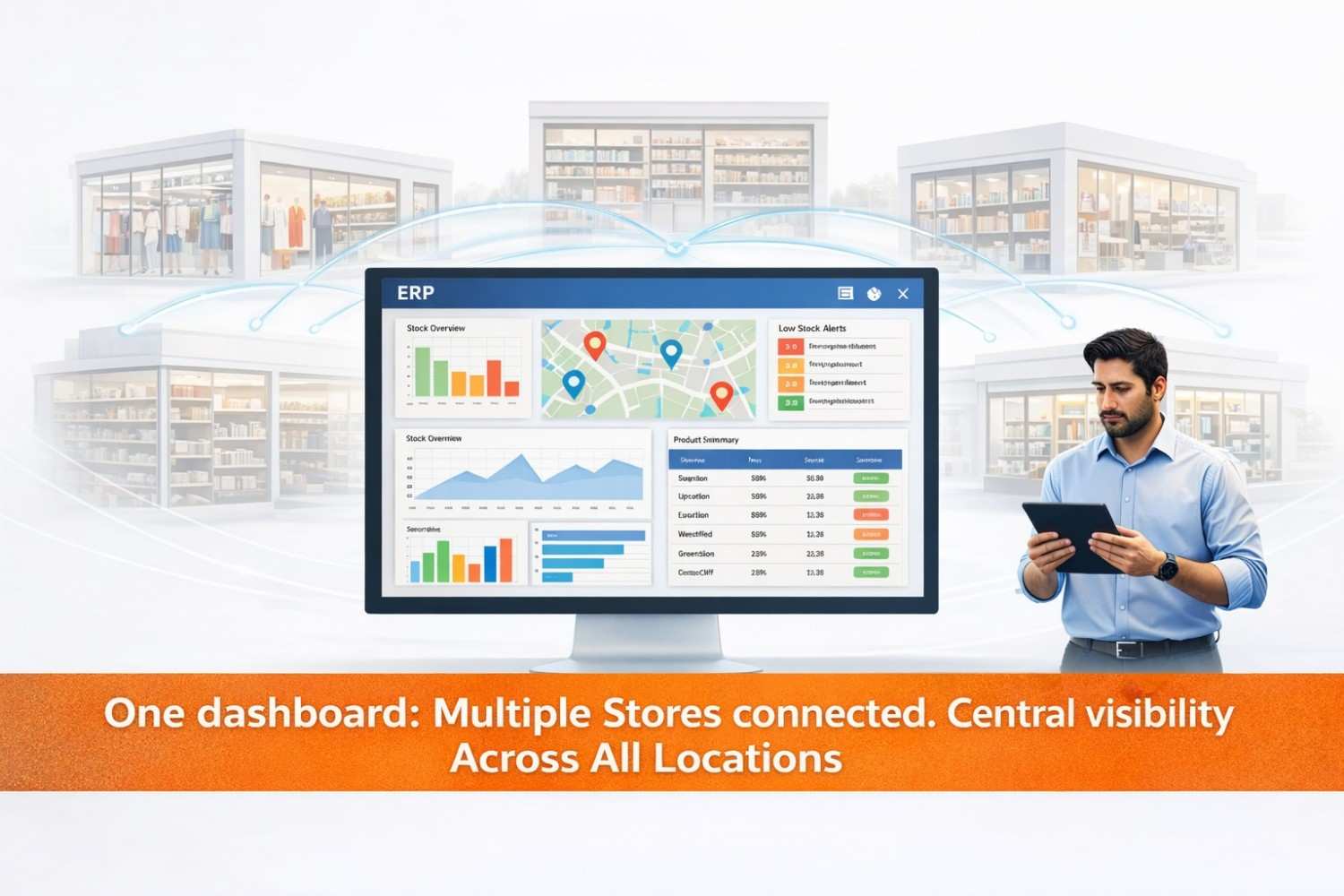
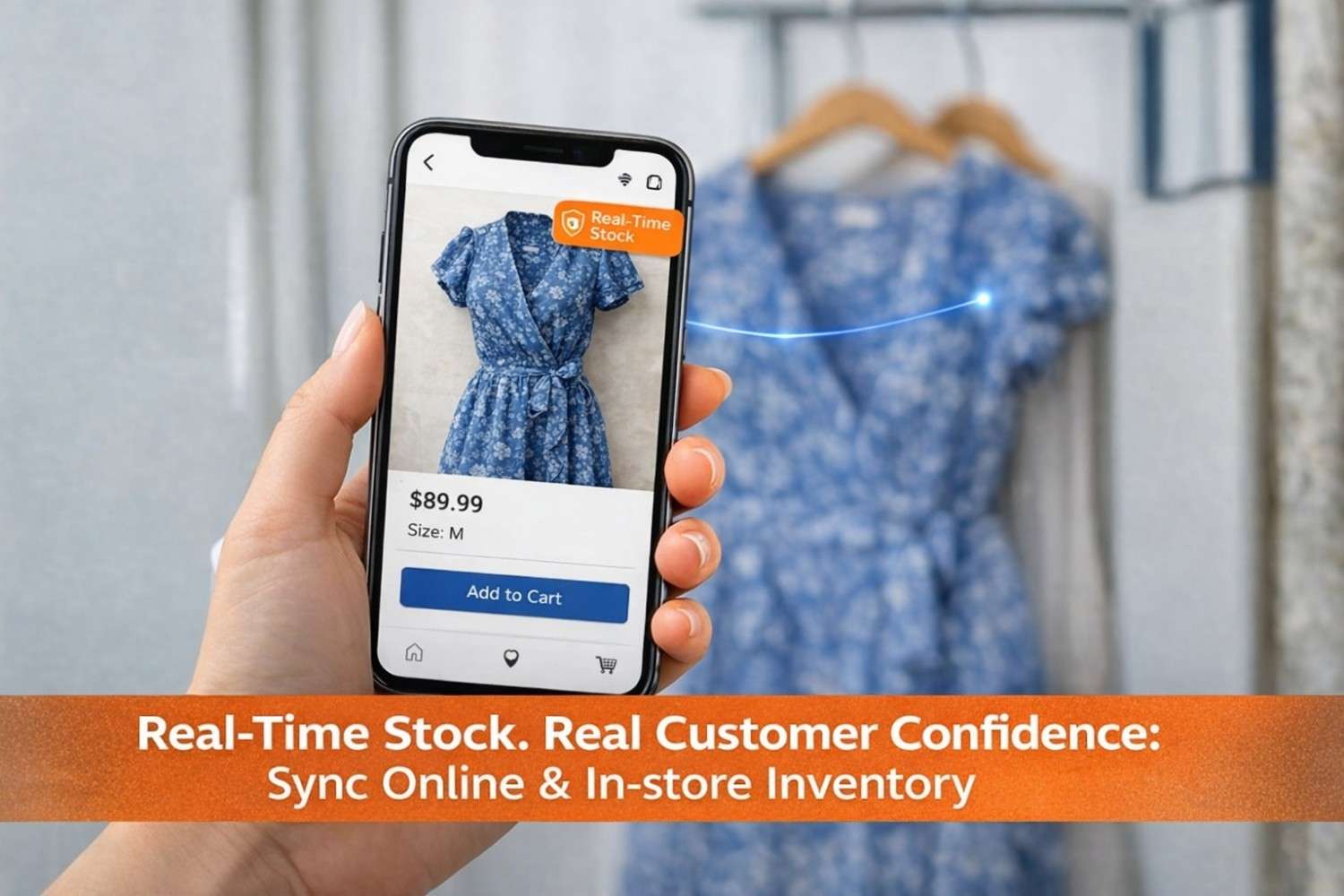
ERP provides live stock data across warehouses, stores, and vans. This helps prevent overstocking and stockouts.
2. Faster and Accurate Order Processing
Orders, billing, and dispatch are automated, reducing manual errors and processing delays.
3. Improved Demand Forecasting
Historical sales data helps predict demand patterns. This is crucial for short-life and fast-selling products.
4. Streamlined Supply Chain Management
ERP offers end-to-end visibility, from procurement to final delivery. Bottlenecks are identified early.
Core ERP Modules Required for FMCG Operations
Not all ERP systems are built for FMCG. The following modules are essential.
How Hornet Technologies Supports FMCG Businesses
Hornet Technologies delivers industry-ready ERP solutions tailored for FMCG operations in Bahrain and across the GCC.
Instead of generic software, Hornet focuses on:
Understanding end-to-end FMCG workflows.
Customizing ERP modules based on real business needs
Ensuring smooth implementation and adoption
Hornet's Implementation Approach:
Real-World Impact. What Changes After ERP Implementation
Industry case studies show ERP implementations delivering measurable ROI within the first 12–18 months when aligned with business workflows. This pattern is consistently reported across ERP vendors serving FMCG verticals in the GCC.
Ready to Transform Your FMCG Operations?
Get a personalized demo of Hornet’s FMCG ERP solution and see how it can streamline your inventory, sales, and financial operations.
How to Choose the Right ERP for Your FMCG Business
Before selecting an ERP, FMCG businesses should evaluate:
- Does the ERP support FMCG-specific workflows?
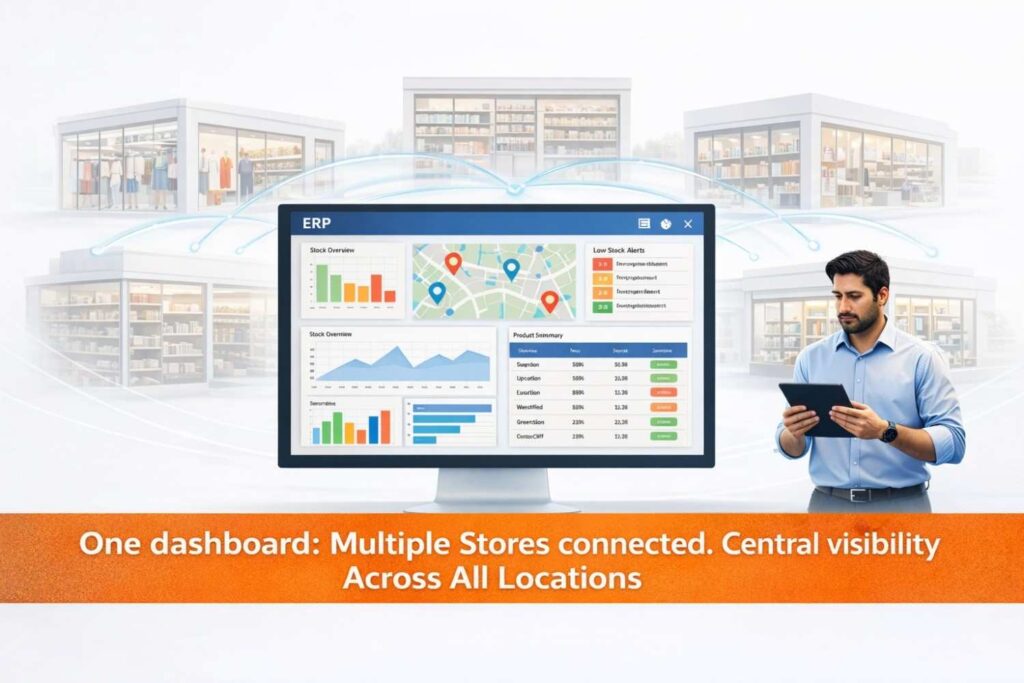
- Can it handle multi-location operations?
- Is it scalable for future growth?
- Does the implementation partner understand FMCG challenges?
- What is the total cost of ownership over time?
Choosing the right implementation partner is as important as choosing the software itself.
Final Thoughts. Speed Needs Structure
FMCG businesses move fast by nature. But without the right systems, speed alone leads to inefficiency and loss.
An integrated ERP system brings structure to speed. It helps FMCG businesses operate with clarity, control, and confidence. For growing FMCG companies in Bahrain and the GCC, this is no longer optional. It’s a strategic necessity.
If your FMCG operations are expanding faster than your current systems can support, this may be the right time to explore an integrated ERP solution designed for real-world FMCG challenges.
Hornet Technologies offers tailored ERP solutions for FMCG businesses across Bahrain and the GCC.
A guided consultation or demo can help you evaluate what fits your operations best.